

ADVANTAGES AND CHALLENGES OF FEEDING FAT
Feeding fat to dairy cows is primarily about ensuring adequate energy supply, as fat is the nutrient with by far the highest energy content.
However, it is not only a matter of increasing fat inclusion, but also of selecting the appropriate form (rumen-protected or not) and composition (C16 vs. C18) that the cow can utilize most efficiently.


FAT TYPE IS CRITICAL FOR SUCCES
Challenge for rumen microorganisms
Before considering energy supplementation strategies, it is essential to understand why fat cannot simply be added in free form. Free fatty acids—especially unsaturated ones—have a direct toxic effect on cellulolytic bacteria responsible for fiber degradation. Fat forms a hydrophobic coating around feed particles, physically preventing microbial enzymes (cellulases) from binding to fiber. This reduces forage digestibility, decreases feed intake, and ultimately lowers milk yield.
Limited ruminal hydrogenation capacity
When cows consume large amounts of unprotected unsaturated fat, biohydrogenation occurs in the rumen, where microbes attempt to saturate fatty acids to reduce toxicity. However, at high levels of unsaturated fat and/or low rumen pH, undesirable trans fatty acids such as trans-10, cis-12 CLA may form. Even in small amounts, these can inhibit milk fat synthesis in the mammary gland. Rumen-protected fat minimizes the formation of these trans fatty acids and stabilizes milk fat percentage.

INTESTINAL ABSORPTION AND THE ROLE OF MONOGLYCERIDES
Once past the rumen, fat reaches the small intestine, where hydrophobic fatty acids must be transported in an aqueous environment for absorption. This requires emulsification, where monoglycerides play a key role alongside bile salts and lecithin.
Co-emulsifier role
Monoglycerides act as surface-active agents, aiding fat droplet breakdown and micelle formation.
Micelle formation
Micelles enable long-chain fatty acids to become effectively “water-soluble” for absorption at the intestinal wall.
Digestibility
Monoglycerides improve overall digestibility, especially of saturated fatty acids, by enhancing enzyme access.
DIFFERENTATION BETWEEN C16 AND C18 FATTY ACIDS
Beyond rumen protection, fatty acid composition is critical. The ratio of C16:0 to C18:0 strongly influences cow response
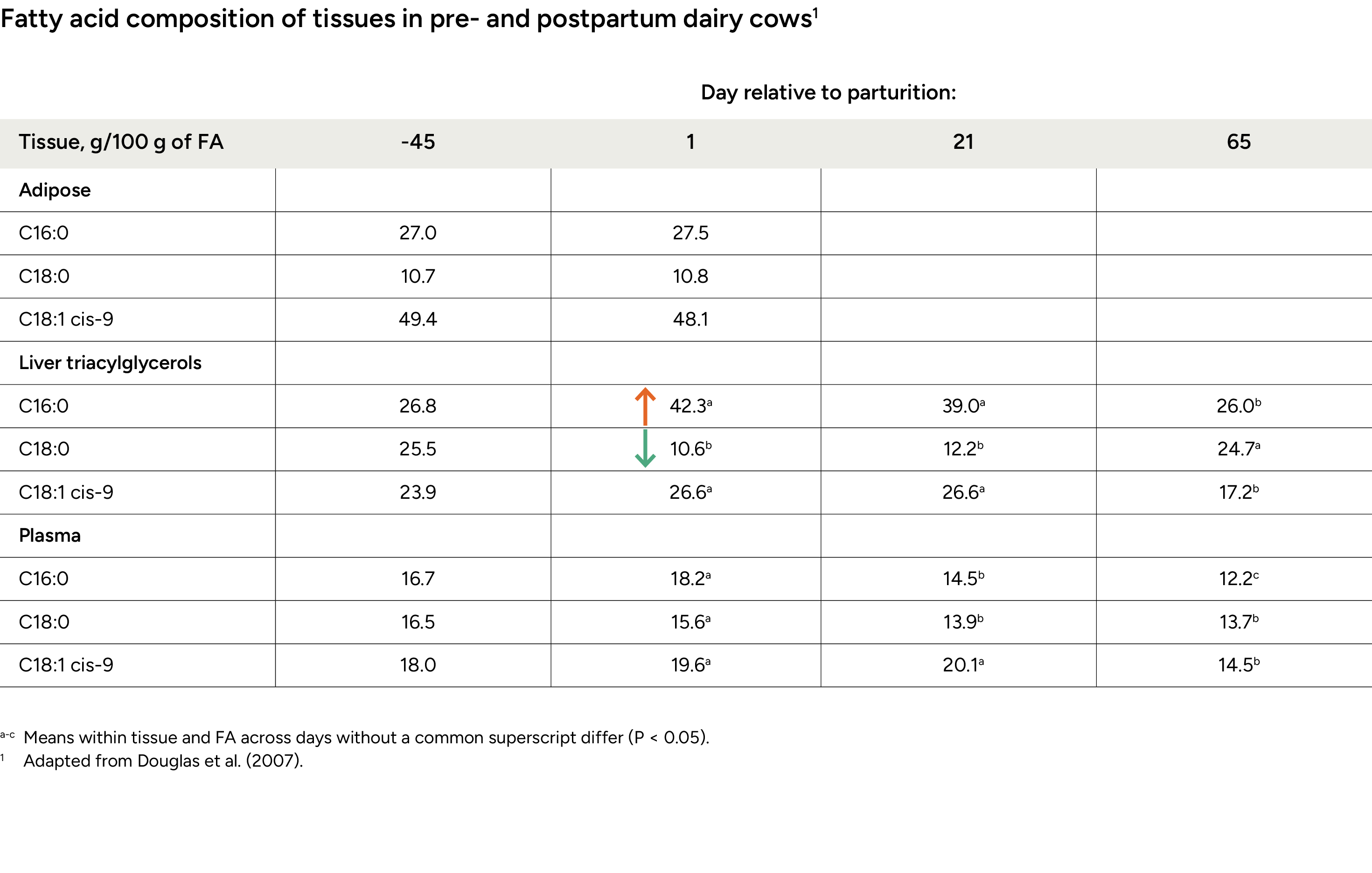
C16:0 (PALMITIC ACID): Highly effective at increasing milk fat percentage and directly incorporated into milk fat synthesis. However, it is less efficiently used in general metabolism and may accumulate in the liver. High inclusion can drive production at the expense of body reserves.
C18:0 (STEARIC ACID): A natural energy source with greater metabolic flexibility. It supports both milk production and body reserve replenishment, making it particularly useful for improving energy balance in early lactation.

Want to find out more?
We provide dedicated assistance and support – every step of the way – whether you have inquiries about deliveries or want to know more about our products and solutions.